


October 10, 2026
How to Choose a Room Divider: A Practical Guide for Any Space
Learn how to choose the right room divider by privacy level, height, length, layout, material, portability, and daily use.
- Buying Guide
- Privacy Screens
- Room Divider Guide
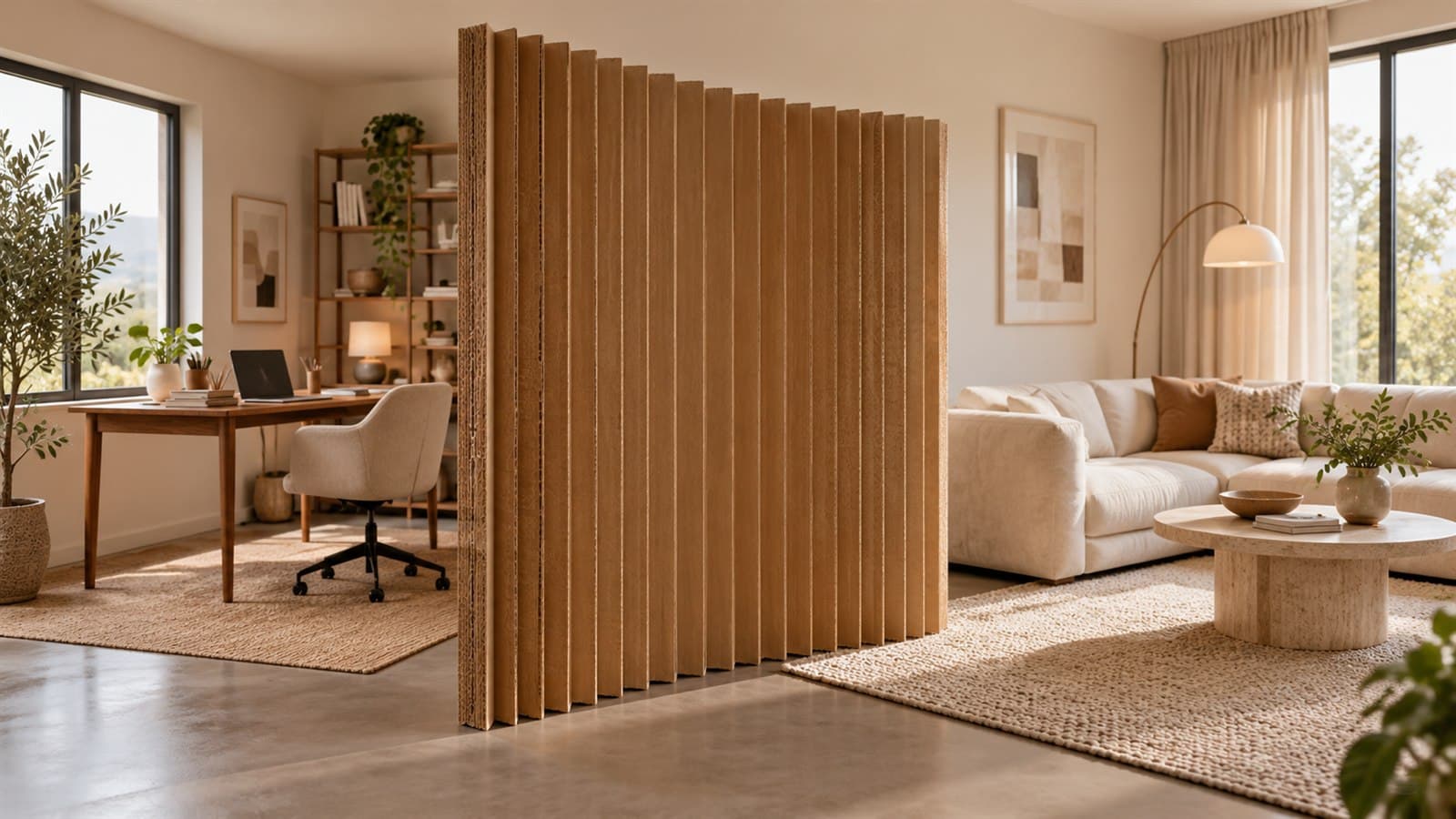
A room divider can create privacy, organize an open floor plan, guide customer flow, or provide a temporary backdrop without changing the building. The right divider depends on what you need it to do every day. Before comparing colors or prices, define the space, the desired privacy level, and how often the divider will move.
1. Start with the purpose
List the main job of the divider. A screen used behind a video call has different requirements from a partition between salon stations or a divider that separates a bed from a living area.
- Visual privacy: choose enough height and overlap to block the important sightline.
- Space zoning: a lower divider may be enough when you want separation without making the room feel closed.
- Background or display: prioritize a clean surface, consistent color, and a shape that frames the subject.
- Temporary layout: prioritize portability, fast setup, and compact storage.
2. Measure the usable path, not only the wall
Measure the floor path where the divider will stand. Include corners, furniture, doors, air vents, and the walking route around the screen. If the divider follows a curved or angled path, measure each segment and add them together.
Accordion-style dividers need folds to remain stable. Their practical coverage can therefore be shorter than their fully stretched length. Keep some extra length available instead of selecting a divider that only matches the opening on paper. See our detailed room divider size guide for a measurement method.
3. Select height by sightline
Choose height according to what must be hidden and whether people will be sitting or standing. A medium-height divider can separate seated work areas while preserving light and supervision. A taller screen provides stronger standing privacy and a more defined visual boundary.
Also check ceiling fixtures, sprinklers, signage, and ventilation. A freestanding divider should never block an exit or required building equipment.
4. Compare materials and movement
| Priority | What to look for |
|---|---|
| Frequent movement | Lightweight construction, a comfortable folded size, and no loose assembly parts |
| Compact storage | Accordion or foldable construction that closes into a narrow footprint |
| Permanent placement | Heavier frame, fixed feet, or anchored construction where permitted |
| Flexible shape | A divider that can form straight, curved, L-shaped, or wave layouts |
Foldable kraft paper dividers are useful when a space changes often. They can expand for use and compress for storage without installation. Traditional framed screens may suit areas where weight and a fixed panel appearance matter more. Our paper versus traditional folding screen comparison explains the tradeoffs.
5. Check privacy, light, and sound expectations
A visual divider blocks sightlines, but it is not the same as a constructed wall. Gaps at the top, bottom, and sides allow air and some light to circulate. Most portable dividers also provide limited acoustic reduction. If speech privacy is essential, combine the divider with distance, soft furnishings, acoustic panels, or a separate enclosed room.
6. Plan for daily operation
Think about who will open, close, and move the divider. Confirm that the folded unit fits through doors and into its storage location. In public or commercial spaces, maintain clear walkways and keep the divider away from heat, moisture, and open flames. Follow local accessibility, fire, and occupancy rules.
Room divider selection checklist
- What sightline needs to be blocked?
- What height and practical coverage are required?
- Will the screen stay in place or move every day?
- Does it need to fit around corners or form a curve?
- Where will it be stored when folded?
- Are exits, vents, sprinklers, and walkways clear?
- Is visual privacy enough, or is acoustic treatment also needed?
Browse our foldable room dividers and privacy screens, or visit Custom Room Dividers when you need help matching a divider to a home, salon, office, retail, or event layout.