October 10, 2026
Best Privacy Divider for Salons: What to Look For
A practical guide to selecting portable privacy dividers for salons, spas, treatment rooms, and flexible service areas.
- Commercial Spaces
- Privacy Screens
- Salon Design
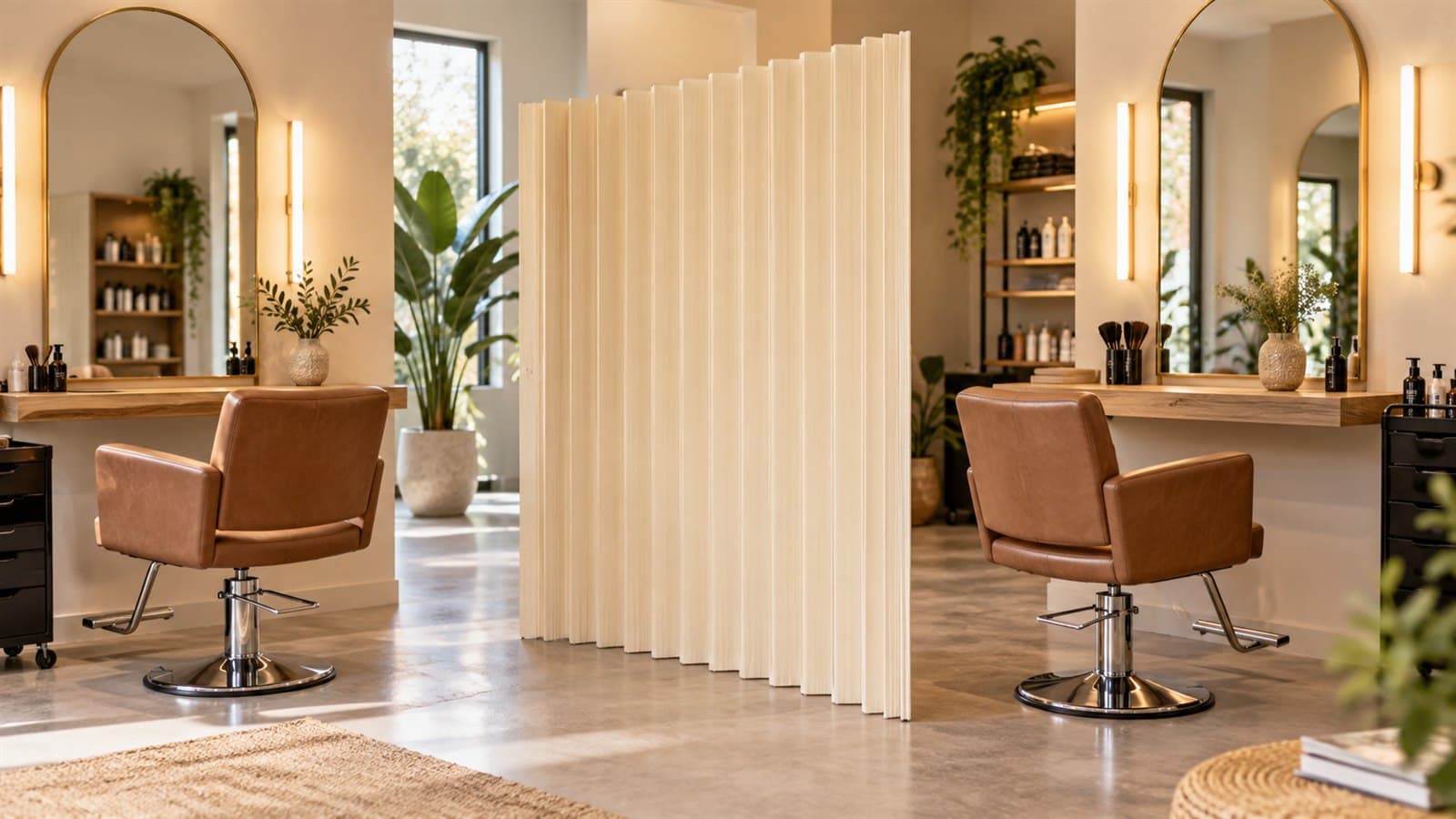
A salon privacy divider needs to do more than hide a sightline. It must support the service workflow, preserve comfortable circulation, look appropriate in client photos, and move or store without disrupting appointments. The best choice depends on the service area and how often the floor plan changes.
Where salons use privacy dividers
- Between styling, nail, brow, or makeup stations
- Around consultation and changing areas
- Between treatment beds in a flexible room
- To screen storage, laundry, or staff preparation areas
- As a temporary background for before-and-after photography
Choose the privacy level first
For seated services, a medium-height divider may block direct views while keeping the room open. For standing clients or changing areas, a taller divider usually provides better coverage. Check privacy from the reception desk, waiting area, mirrors, and nearby walkways rather than judging only from directly in front of the station.
Keep the client journey clear
Map the route from reception to the service station and back. The divider should not narrow required access, create a hidden trip point, or block doors, exits, vents, sprinklers, electrical panels, or emergency equipment. Commercial requirements vary, so confirm local fire, accessibility, and occupancy rules before changing the layout.
Prioritize flexible placement
Salons often change their layout for busy periods, private appointments, training, photography, or events. A lightweight accordion divider can form a straight line, gentle curve, L-shape, or partial enclosure, then compress for storage. This is useful when permanent construction or drilling is not practical.
Measure for salon use
Measure the actual path around the station and leave enough room for the stylist, client, chair, trolley, and equipment. Accordion dividers are most stable when some folds remain in the structure, so practical coverage may be shorter than the maximum fully extended length. Select extra length when the screen must turn a corner or wrap around a treatment zone.
Our height and length guide explains how to account for folds and access openings.
Consider appearance on camera
Clients regularly photograph salon results. Choose a neutral or brand-compatible color that does not create a distracting background. A consistent surface can also hide visual clutter behind a station. Test the divider under the salon’s real lighting before deciding on final placement.
Cleaning and care
Kraft paper dividers should be kept dry and away from splashes, chemical overspray, open flames, and heated tools. Do not use them where regulations require a washable medical-grade barrier. For routine care, follow the product instructions and use a dry, gentle method. Position the divider far enough from sinks and processing areas to reduce accidental contact.
Salon divider checklist
- Blocks the required seated or standing sightline
- Leaves comfortable working space around chairs and beds
- Maintains exits, accessibility routes, and ventilation
- Moves easily when the appointment layout changes
- Folds small enough for the available storage area
- Matches the salon’s lighting, colors, and photo background
- Stays away from water, chemicals, flames, and hot tools
Explore foldable privacy screens for salon layouts. For multiple stations, unusual dimensions, or a branded commercial project, use our Custom Room Dividers page to describe the space and required coverage.